How Real Estate Postcards Help Build Local Brand Awareness and Generate Leads?
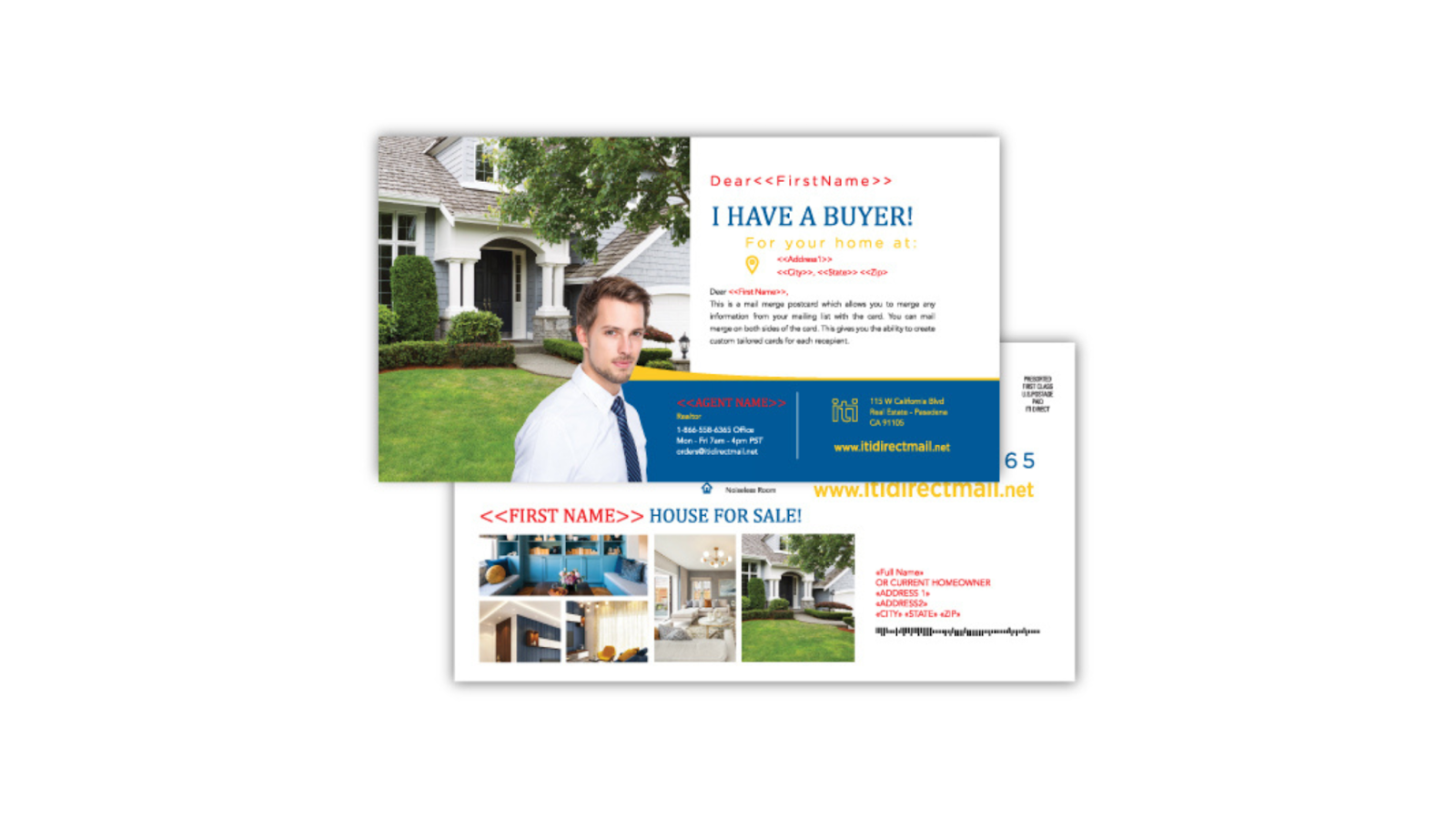
Picture this: you sort through your daily mail and, tucked between bills and flyers, there’s a bold, eye-catching postcard that instantly grabs your attention. No clicks, no scrolling, no pop-up windows, just a tangible message you can hold in your hands. That’s the quiet power of postcards in today’s fast-paced, screen-saturated world. Far from being a relic of the past, real estate postcards have earned their place as a timeless marketing tool, especially in industries like real estate, where personal connection and visual impact matter. They stand out not because they’re old-fashioned, but because they cut through the noise, delivering a direct, memorable touchpoint that digital ads often fail to match.
When someone pulls their mail from the box at the end of the day, your postcard is right there in their hands. Unlike an email, which can be deleted without even being opened, or an online ad that disappears with a quick scroll, a postcard demands attention from the very first second. There’s no envelope to rip open, no login or link to click, your brand, your photo, your headline, and your offer are immediately visible. This instant visibility means your message isn’t buried; it’s front and center at the exact moment the recipient interacts with it.
That matters even more in real estate, where familiarity and trust are key to winning clients. In your local market, recognition can make all the difference. Homeowners and buyers tend to reach out to the professionals they already know, or at least recognize. A well-designed postcard keeps your face, your name, and your expertise fresh in their minds, reinforcing that connection over time. Whether you’re introducing yourself to a new neighborhood, updating a community on recent sales, or inviting people to an open house, postcards are a direct, visual, and personal way to communicate.
In this blog, we’re going to go far beyond the idea that postcards are just a way to “get your name out there.” We’ll dive into how they actively build brand recognition, position you as a trusted expert in your community, and generate leads that are more likely to convert into sales. We’ll explore the design elements that make a postcard stand out, the strategies that turn mailings into measurable results, and the role consistency plays in keeping you top-of-mind. By the end, you’ll see how a thoughtfully crafted real estate postcard can become one of the most powerful tools in your marketing arsenal, and how it can seamlessly complement the rest of your outreach efforts.
Building Local Brand Awareness with Real Estate Postcards
One of the most powerful advantages of real estate postcards is their ability to keep your brand consistently in front of your community. In real estate, visibility is everything. You could be the most skilled negotiator or the most knowledgeable market expert, but if people don’t remember you when it’s time to buy or sell, you’ll lose the opportunity to someone else. Postcards solve this problem by giving you a way to appear in your audience’s daily life on a predictable schedule. Whether you choose to send them monthly, quarterly, or around key seasonal market shifts, you’re planting a constant reminder in the minds of potential clients that you’re active, reliable, and ready to serve. Over time, your face, name, and logo start to feel familiar, and familiarity breeds trust.
Think about it from the homeowner’s perspective. Maybe they’re years away from selling, or they’re still casually browsing the idea of buying an investment property. They might not be ready to pick up the phone today, but when that decision point finally arrives, they’re not scrambling to research agents from scratch. They’ve been “seeing” you regularly, in their mailbox, on their fridge, or pinned to their bulletin board. That recognition is the result of a slow and steady drip of marketing over months or even years, and postcards are one of the most cost-effective ways to create that constant, low-pressure presence.
Beyond frequency, the local focus of postcards makes them especially powerful. Real estate is inherently tied to location, and postcards allow you to lean into that connection in a way digital ads often fail to replicate. By featuring local imagery, photos of the park where families walk their dogs, a popular coffee shop in the neighborhood, or a landmark building that everyone recognizes, you create an instant sense of relevance. Recipients immediately understand that this message is about their community, not some generic housing market. That kind of targeted familiarity makes your marketing feel more personal and more trustworthy.
You can take this a step further by including hyper-local market updates. Sharing recent sales in their area, average listing prices, current days on market, and even inventory trends gives homeowners a reason to keep reading. These details aren’t just interesting, they’re useful. They position you as the expert who has their finger on the pulse of the neighborhood. You’re not just another agent sending generic sales pitches; you’re the resource they can turn to for accurate, relevant, and timely information. When that perception takes hold, your brand evolves from a name they recognize to the professional they rely on.
But postcards aren’t just for delivering statistics; they’re also a canvas for your brand personality. This is your chance to showcase who you are as an agent and what sets you apart. Maybe your tone is polished and sophisticated, appealing to luxury home buyers. Maybe it’s warm and approachable, perfect for connecting with first-time buyers and young families. The words you choose, the colors you use, and the style of your photography all work together to communicate that personality.
Your niche plays a big role here, too. If you specialize in downsizing retirees, your postcards might feature messaging about simplifying life, freeing up equity, or moving closer to loved ones. If you focus on investment properties, you might highlight ROI potential, rental market trends, or your experience in managing multi-unit transactions. Postcards give you the flexibility to align every aspect of the design, from the headline to the imagery, with your specific target audience. This makes your message stick in their minds because it speaks directly to their needs, aspirations, and concerns.
The beauty of postcards is that they combine consistency, locality, and personality in one compact marketing tool. They’re visual reminders that you’re a part of the community, an expert in the market, and a professional with a distinct approach. Over time, these reminders do more than build brand awareness; they create brand loyalty. And in a competitive industry like real estate, loyalty is what keeps your phone ringing and your pipeline full.
Generating Leads Through Strategic Postcard Campaigns
The true power of real estate postcards lies in their flexibility; they can be fine-tuned to speak directly to the people you most want to reach. Unlike one-size-fits-all advertising, postcards allow you to shape your message for very specific audiences. If you’re targeting potential sellers, your campaign might center around home valuation offers, “Just Sold” success stories, or data on recent neighborhood sales. These homeowners want to know two things: what their home might be worth and how quickly it could sell. By showing them local market activity and positioning yourself as the agent who gets results, you make it easier for them to envision their own property being next on your sold list.
If your focus is on buyers, the approach changes entirely. These recipients are looking for opportunity, access, and guidance. For them, your postcard might highlight upcoming open houses, new listings in competitive neighborhoods, or attractive financing programs that make purchasing more attainable. Including enticing property photos, quick bullet points about features, and clear directions on how to schedule a viewing can turn casual interest into an actual showing.
Investors form yet another audience, and they require an entirely different set of talking points. With them, you might emphasize ROI potential, rental income projections, or off-market deals. The more segmented your list, the more relevant and impactful your postcard becomes. By dividing your audience into clear groups, sellers, buyers, and investors, you can ensure that every postcard speaks directly to that group’s unique motivations, concerns, and priorities. This kind of targeted messaging not only boosts engagement but also shows prospects that you truly understand their needs.
Of course, a postcard’s purpose is not just to look attractive; it’s to drive action. Every single campaign should include a clear, compelling call to action (CTA) that leaves no doubt about the next step. The best CTAs are direct, simple, and benefit-driven. For sellers, that could be: “Call today for your free, no-obligation home valuation.” For buyers, it might be: “Join us for an open house this Sunday from 1–4 PM.” Or, for general market engagement: “Visit our website to see the latest listings in your area.”
The key here is clarity. Never make the recipient guess what to do next. Whether it’s calling a number, scanning a QR code, or visiting a website, the instructions should be obvious and easy to follow. A strong CTA removes friction from the process, making it effortless for someone to respond the moment they decide they’re interested.
Another highly effective lead-generation tactic with postcards is creating a sense of exclusivity. People respond strongly to offers that feel special, limited, or time-sensitive. For example, you could offer a free staging consultation for sellers who list their property by the end of the month. Or you might invite buyers to an early viewing event for a property before it hits the MLS. These types of offers create urgency, prompting recipients to act quickly so they don’t miss out. The psychological principle of scarcity, when people perceive something as rare or limited, can significantly increase response rates.
To make your postcard campaigns even more effective, you should also think about tracking and measurement. In today’s marketing environment, guesswork isn’t good enough; you need data. One of the easiest and most cost-effective ways to track engagement is by incorporating scannable QR codes that lead to a dedicated landing page. You could also use custom URLs that are unique to each campaign or a dedicated phone number to capture responses.
These tracking tools give you real, actionable insights: you’ll know exactly how many people interacted with your postcard, which neighborhoods are more responsive, and which offers generated the most leads. Over time, this data allows you to refine your campaigns for even better results. You can double down on the messages and designs that work while adjusting or replacing those that don’t.
Strategic postcard campaigns don’t just happen; they’re the result of careful audience segmentation, message crafting, and follow-through. When you combine targeted content, compelling CTAs, exclusive offers, and measurable results, you create a direct mail strategy that not only builds awareness but actively fills your pipeline with qualified leads.
Design and Content Essentials for High-Impact Real Estate Postcards
When it comes to real estate postcards, design isn’t just about making something look nice; it’s about making an immediate visual impact that prompts the recipient to engage with your message. In real estate, visuals sell. The first thing a potential buyer or seller notices is the imagery, so it’s crucial to use high-quality, authentic photography that reflects the property and community you represent. This could mean showcasing a recently sold home in the neighborhood, a new listing with strong curb appeal, or even a vibrant image of a well-known local park or landmark. These visuals instantly tell the recipient that this postcard is relevant to their area.
Generic stock images, on the other hand, can work against you. They often feel impersonal and can create skepticism about whether you truly know the local market. Authentic, location-specific images build credibility and trust because they connect your marketing to the reality of the recipient’s surroundings. For lifestyle-focused marketing, consider adding photos that convey how it feels to live in the area, a family enjoying the nearby farmer’s market, a scenic walking trail, or a bustling town square. These types of images help potential buyers envision themselves in that environment, and sellers feel pride in their neighborhood.
While the visuals draw people in, your headline keeps them reading. In the fast-paced world of direct mail, you have only seconds to capture interest. Your headline should be bold, benefit-driven, and easy to read at a glance. Instead of something vague like "Thinking of Selling?", you might use a more compelling hook like "Homes in Your Neighborhood Are Selling for Record Prices" or "Get Your Free Home Valuation Before the Spring Market Surge". These kinds of headlines clearly state the value to the reader and create curiosity about what’s inside.
The layout and structure of your postcard matter just as much as the words and images. Remember, postcards are not long-form sales letters; people are likely to skim rather than read every detail. Use short, clear sentences or bullet points to highlight the most important information, such as recent sales results, an upcoming open house, or a limited-time offer. Make key points stand out with bold fonts, color blocks, or icons so they can be absorbed in just a few seconds. This design approach ensures that even someone giving your postcard only a quick glance still walks away with your main message.
Another vital element is brand consistency. Your postcard should visually align with all of your other marketing materials, from your website to your social media graphics. That means using your logo prominently, sticking to your established brand colors, and keeping fonts consistent. Over time, these design choices build recognition, and recipients should be able to identify your marketing instantly without even reading your name. A cohesive brand presence signals professionalism, reliability, and attention to detail, all of which are key qualities in the real estate industry.
Finally, personalization takes your postcard from good to great. With variable data printing, you can go beyond sending a generic message to every household. Instead, you can address each recipient by name, reference their neighborhood specifically, or even include information about a home sale that happened nearby. For example: "Hi Sarah, did you know a home just two streets over sold for $50,000 over asking?" This small touch makes the postcard feel more like a personal note than a mass mailing, significantly increasing the likelihood that it will be read and acted upon.
When these elements, authentic visuals, attention-grabbing headlines, skimmable content, brand consistency, and personalization, work together, your real estate postcards become far more than just marketing materials. They become a familiar, trusted presence in the recipient’s home, a direct connection to your expertise, and a constant reminder that you’re the professional to call when they’re ready to take the next step in the market.
Mailing Strategies for Maximum ROI
In real estate postcard marketing, your mailing list is the single most important factor in determining your results. No matter how beautiful your design or compelling your offer, sending postcards to the wrong audience will waste both time and budget. That’s why it’s crucial to build targeted lists based on key qualifiers such as income level, homeowner status, property type, or geographic location. For example, if your goal is to generate listing leads, you’ll want to focus on homeowners rather than renters, ideally in areas where property values have appreciated significantly in recent years.
If you’re working in a broad geographic area, tools like Every Door Direct Mail (EDDM) can be incredibly valuable. EDDM allows you to blanket specific carrier routes, covering entire neighborhoods, without having to purchase or maintain your own mailing list. This makes it one of the most cost-effective ways to saturate a market with your brand. It’s particularly useful if you’re targeting farm areas where consistent exposure over time leads to higher recognition and response rates.
Once you have the right audience, frequency becomes the next key factor. Mailing too often can feel intrusive, leading recipients to tune you out, while mailing too infrequently risks having them forget you entirely. The sweet spot for most real estate agents is monthly or quarterly mailings. Monthly campaigns are ideal if you want to dominate a neighborhood and stay top-of-mind year-round, while quarterly mailings can be a cost-effective way to maintain a steady presence without overspending.
Timing your campaigns strategically can also boost response rates. Align your mailings with seasonal trends in the market. For instance, spring is traditionally the busiest listing season, making it a great time to send postcards promoting your home valuation services. In late summer or early fall, you might focus on buyers looking to settle in before the school year. Year-end campaigns can highlight investment opportunities or tax-related benefits of buying or selling before December 31. By syncing your message with what’s happening in the market, you make your postcards more relevant and actionable.
But even the best-timed postcard campaign works best when it’s part of a larger, multi-channel marketing strategy. Your audience is more likely to respond when they see your message in multiple places. That means following up your postcard campaign with targeted social media ads aimed at the same geographic area, email newsletters to your database, and relevant updates on your website. This creates a consistent, reinforced brand presence; the recipient not only sees your postcard in their mailbox but also recognizes your name when they scroll through Facebook, check their inbox, or search for local agents online.
Another effective approach is to integrate your postcards into a lead-nurturing system. For example, when someone scans a QR code on your postcard and visits your landing page, they can be automatically added to your email drip campaign. This way, you’re not just generating a one-time interaction; you’re building an ongoing relationship with that lead. Over time, this kind of strategic follow-up can dramatically increase your conversion rates.
Measuring Success and Refining Campaigns
One of the biggest advantages of real estate postcards today is that they’re no longer a “send it and hope” type of marketing tool; you can measure their performance just like you would a digital ad. By integrating simple tracking tools such as QR codes, custom URLs, or dedicated phone lines, you can see exactly how many people are engaging with your postcards. For example, a QR code can take recipients to a landing page with your latest listings, while a custom URL can lead them to a free home valuation form. A dedicated phone line or extension ensures that when calls come in, you know they’re coming directly from that specific campaign. This not only gives you real numbers to work with, but it also helps you justify your marketing spend with hard evidence.
Once you’ve set up tracking, the next step is to experiment with different approaches, also known as A/B testing. The idea here is to run two or more variations of a postcard and compare the results to see what resonates most with your audience. For example, you might test one postcard that features a neighborhood market update against another that showcases a just-listed property. You could also try testing two different calls to action, one encouraging homeowners to “Call today for a free home valuation” and another offering a “Free staging consultation for new listings.” Over time, these tests reveal valuable insights into what actually drives responses in your target area.
The real gold, however, comes from reviewing your campaign data regularly. Look beyond just the overall response rate and dig into the details. Are certain neighborhoods generating more calls than others? Are specific price ranges attracting more inquiries? Do weekends produce more online visits from your QR codes than weekdays? These patterns can tell you a lot about both your audience’s behavior and your market’s timing.
It’s also important to pay attention to the types of offers that work best. For instance, you may discover that limited-time promotions, such as “List your home by March 31 for a free professional photo package,” generate more urgency than evergreen offers. Or you might find that postcards featuring high-quality images of local landmarks get more engagement than those showing generic interiors. Each campaign becomes an opportunity to learn and fine-tune your strategy.
Ultimately, the goal is continuous improvement. Real estate postcard marketing isn’t a one-and-done effort; it’s an evolving process where every mailing teaches you something new. By combining consistent tracking, strategic testing, and regular performance reviews, you can refine your targeting, design, and messaging to produce better results over time. And because the real estate market changes from season to season, keeping your campaigns flexible and data-driven ensures that you’ll always be ahead of the curve.
Why Partnering with a Professional Mailing Service Matters?
Designing, printing, and mailing postcards can be time-consuming, especially if you’re also juggling client meetings, open houses, and negotiations. That’s where a professional mailing service can make a huge difference.
A partner like LetterPrinting can handle every step, from designing a postcard that fits your brand, to printing it with professional quality, to mailing it using USPS-compliant processes. We can also help you target the right audience, personalize your postcards with variable data printing, and even secure bulk mailing discounts to lower your costs.,
By outsourcing to experts, you save time, reduce stress, and ensure your campaigns are executed flawlessly.
Real estate postcards aren’t just a nice extra in your marketing mix; they’re a proven tool for building brand recognition, connecting with your local market, and generating high-quality leads. When designed well, targeted strategically, and mailed consistently, they can keep you top-of-mind in your community and make you the first call when someone is ready to buy or sell.
At iti Direct Mail, we specialize in designing, printing, and mailing high-impact real estate postcards that keep your brand in front of your ideal audience. From targeted list creation to USPS delivery, we handle it all, saving you time while helping you close more deals.
Visit our website to start your next postcard campaign today and see how powerful a well-executed mailing can be for your real estate business.


