From List to Mailbox: How Mass Mailing Services Handle the Heavy Lifting for Marketing Teams
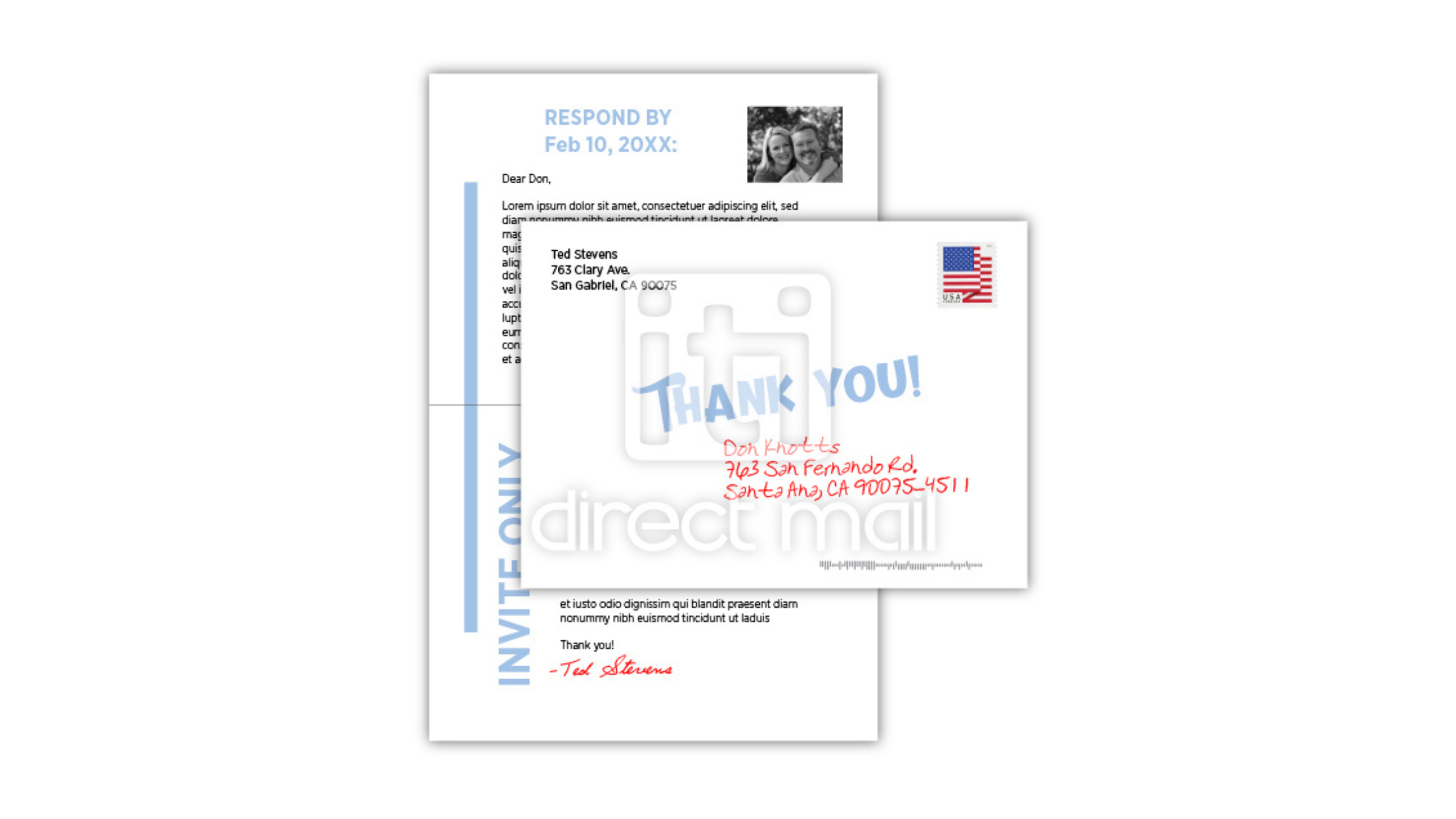
Most marketing teams have a great campaign idea and a tight deadline, but very little time to figure out printing specs, USPS regulations, mailing list formats, and delivery logistics all at once. Mass mailing services exist to take all of that off the plate, turning a complex multi-step process into something a small team can actually execute without burning out. What looks from the outside like "sending mail" is actually a carefully sequenced production workflow, and understanding each stage helps you work more effectively with your provider and set every campaign up for the results it deserves.
Ready to Boost Your Direct Mail Response?
Get professional printing and mailing services tailored to your campaign goals.
Step One: The Mailing List
Every direct mail campaign starts with a list, and the quality of that list shapes everything that follows. A clean, accurate, well-targeted list saves money on postage, improves deliverability, and makes the rest of the production process run smoothly. A bad list does the opposite on all three counts.
Mailing lists come from a few different places, depending on the campaign. Businesses with established customer databases typically export records from a CRM or billing system and submit that file to their mailing service. Prospecting campaigns targeting new audiences usually involve purchasing a list filtered by geography, demographics, household income, business type, or other criteria. Campaigns using USPS Every Door Direct Mail skip the list entirely and target every address on selected carrier routes instead.
Regardless of source, the list goes through a hygiene process before anything else happens. NCOA processing runs the list against the USPS National Change of Address database, updating records for anyone who has moved and filed a change of address with the post office. Deduplication removes duplicate records so the same household doesn't receive two copies of the same piece. Address standardization formats every record to USPS specifications, which is required for mail to process correctly through automated USPS systems.
CASS certification, which stands for Coding Accuracy Support System, is the USPS validation process that confirms addresses are accurate and properly formatted. CASS-certified addresses qualify for the full range of bulk postage discounts and process through the USPS system with the highest deliverability rates. A professional mass mailing service handles all of this as standard workflow, so the client submits a list and the provider returns a clean, USPS-compliant file ready for production.
Step Two: Design and Print Specs
Once the list is clean and confirmed, the campaign moves into print production, and this stage has more technical requirements than most people outside the print industry expect.
File requirements vary based on the format being mailed. A postcard has different dimension requirements, bleed specifications, and safe zone standards than a folded direct mail letter inserted into an envelope, which in turn differs from a self-mailer or a tri-fold brochure. Getting these specs right before production starts prevents costly reprints and delays after files have already gone to press.
Resolution standards for print are higher than for digital. Images and graphics that look sharp on a screen at 72 DPI often print softly or blurry at 300 DPI, which is the standard minimum for professional print output. Color mode matters too. Files built in RGB, which is standard for screen design, need to be converted to CMYK for offset and digital print to reproduce colors accurately. A professional provider reviews incoming files for these issues and flags them before production begins.
Variable data printing adds a layer of personalization that standard printing can't achieve. With variable data, each piece in a run carries unique information drawn from the mailing list, whether that's the recipient's first name in the salutation, a customized offer based on their purchase history, or a localized headline that references their city or neighborhood. The production setup is more involved, but the response rate improvements for personalized pieces consistently justify the additional work for campaigns targeting segmented audiences.
The proofing and approval process is the last checkpoint before anything goes to press. Most professional providers supply a digital proof for client review and sign-off, and some offer physical proofs for campaigns where color accuracy or finish quality needs to be verified before a full run begins. No reputable provider starts a production run on a campaign of meaningful scale without documented client approval.
Step Three: Presort and USPS Compliance
Presorting is the step that makes bulk postage rates possible, and it's also the step that most businesses can't realistically handle in-house without dedicated equipment and USPS training.
Presorting organizes outgoing mail by zip code, carrier route, and delivery sequence before it reaches the USPS facility. By doing this work on behalf of the postal service, mailers qualify for discounted postage rates under USPS Marketing Mail. The more precisely sorted the mail is, the deeper the discount. Drop shipping sorted mail directly to the destination USPS facility, bypassing the origin facility entirely, qualifies for additional savings that reduce per-piece postage costs further.
Permit imprints, the indicia printed directly on a mailpiece in place of a stamp, are standard for bulk campaigns at volume. They eliminate the cost and logistics of applying individual stamps or running pieces through a postage meter and are required for certain mail classes. A professional mass mailing service maintains the USPS permits, handles the permit documentation, and manages the postage payment process so clients don't need to open and maintain their own USPS bulk mail accounts.
USPS Marketing Mail is the class used for most promotional campaigns, newsletters, and non-time-sensitive communications. First-Class Mail moves faster and handles certain types of content that Marketing Mail doesn't cover, but it costs significantly more per piece. A good provider helps clients choose the right mail class based on content, timing, and budget rather than defaulting to one class for every campaign.
Step Four: Production and Lettershop Work
With the list cleaned, files approved, and USPS specs confirmed, production begins. For campaigns involving only a printed piece with no inserting or assembly, this stage is primarily print and addressing. For campaigns involving letters, reply envelopes, brochures, or multiple inserts, the lettershop work adds additional steps that require precision at scale.
Printing, folding, inserting, sealing, and applying addresses all happen within the same facility at a professional operation, which matters more than it sounds. Every handoff between separate vendors introduces a point where errors can enter, timelines can slip, and accountability can blur. A single facility handling the complete production run means one team owns the quality of every step.
Addressing gets applied either inline, meaning during the same pass as printing, or offline, meaning as a separate step after printing is complete. Inline addressing is faster and more consistent for simple formats. Offline addressing allows more flexibility for complex formats or campaigns where the print and mail pieces need to be matched after separate production runs.
Quality checks run throughout production rather than only at the end. Checking address placement, fold accuracy, insert completeness, and seal integrity on a sample basis at multiple production stages catches errors early, before they've been replicated across the full run. A provider that only inspects finished pieces at the end of production is a provider that has already shipped the mistake before noticing it.
Step Five: Drop Shipping and Delivery
The final stage moves completed mail from the production facility into the USPS system and from there to recipient mailboxes.
Drop shipping means transporting sorted, bundled mail directly to the USPS destination facility closest to the recipients rather than entering the mail at the origin facility and letting the USPS handle all the transportation. This speeds up delivery because the pieces are already where they need to be when they enter the postal system, and it qualifies for additional postage discounts because the mailer is absorbing transportation costs the USPS would otherwise incur.
For national campaigns mailing to multiple regions, drop shipping to multiple destination facilities simultaneously is standard practice. Pieces destined for Los Angeles go to a Los Angeles USPS facility. Pieces going to Chicago go to a Chicago facility. The result is more consistent delivery timing across a geographically dispersed list and lower total postage cost.
USPS Marketing Mail delivery windows typically run three to fifteen post office delivery days from the date of entry into the postal system. Planning campaign timing around this window is essential for offers with expiration dates or event-tied promotions. A professional provider can advise on realistic drop dates based on your campaign's delivery target and the production timeline required to meet it.
Tracking for bulk campaigns is available through USPS Intelligent Mail barcodes, which most professional providers include as standard. IMb tracking doesn't give piece-level delivery confirmation the way a package tracking number does, but it provides entry and processing data that gives visibility into where in the delivery cycle a campaign sits.
What This Means for Small Marketing Teams
The full picture of what mass mailing services handle makes the value proposition for small teams clear: one vendor relationship replaces what would otherwise be three or four separate ones, and the expertise required to execute each step professionally comes built into the engagement rather than having to be hired or learned in-house.
Predictable costs make budgeting easier. A full-service provider quotes the complete job, covering print, lettershop, postage, and delivery, so there are no line items that surface after the invoice arrives. Campaigns go out on time without internal staff managing production logistics, monitoring USPS compliance, or coordinating between vendors. And the finished product reflects professional execution at every stage, which matters for the brand impression the recipient receives before they read a single word of the copy.
LetterPrinting.net: The Reliable Direct Mail Partner for Small and Mid-Size Businesses
LetterPrinting.net has built its reputation on being the affordable, consistent direct mail partner for small and mid-size businesses that need professional results without the overhead of managing the process themselves. Every project is handled in-house from list to mailbox, with a team that knows USPS requirements, production standards, and what it actually takes to get a campaign out on time and on budget. Whether it's a 500-piece prospecting mailing or a recurring monthly campaign for an established client base, the process runs the same way every time. Visit LetterPrinting.net or call 866-558-6365 to get a quote on your next campaign.
Conclusion
From the first address on a list to the last piece in a mailbox, mass mailing services handle the steps that most marketing teams simply don't have the bandwidth to manage on their own. Understanding the process from list hygiene through final delivery helps businesses choose better partners, prepare campaigns more effectively, and set realistic expectations for what a well-executed direct mail campaign can deliver. The complexity of the workflow is exactly why professional services exist, and when the right provider is handling it, that complexity becomes invisible.
Frequently Asked Questions
What does a mass mailing service actually do from start to finish?
A full-service mass mailing provider manages every step of the direct mail process, including list hygiene and NCOA processing, file review and print production, variable data personalization, presorting for bulk postage rates, lettershop work such as folding and inserting, and final delivery through the USPS. The client provides approved artwork and a mailing list, and the provider handles everything from there through delivery.
Can a small business afford to use a professional mass mailing service?
Yes. Most professional mass mailing services work with businesses of all sizes, and the postage savings from bulk rates alone often offset a significant portion of the service cost compared to mailing at standard retail rates. The savings on staff time and in-house production frequently make a professional service more cost-effective than doing it in-house, even for smaller campaigns.
How far in advance do I need to submit my campaign for bulk mail delivery?
Most campaigns require five to ten business days from approved file submission to drop at the USPS facility, with delivery adding another three to fifteen days for Marketing Mail. Campaigns with hard delivery deadlines should work backward from the required in-home date to set a file submission deadline, factoring in time for proofing and approval.
What file formats do I need to provide to a mailing service for printing?
Most providers accept print-ready PDF files built to the specific dimensions, bleed, safe zone, and color mode specifications for the format being mailed. High-resolution images at 300 DPI in CMYK color mode are standard requirements. Many providers also accept native design files from applications like Adobe InDesign or Illustrator, though a print-ready PDF is typically preferred for accuracy.
How do mass mailing services handle returned or undeliverable mail?
USPS Marketing Mail generally does not return undeliverable pieces to the sender, which is why list hygiene and NCOA processing before a campaign are important. First-Class Mail returns undeliverable pieces with forwarding address information when available, making it the better choice for campaigns where deliverability feedback is needed to maintain list accuracy.
Written by The Letterprinting Team | 25 May, 2026


