Why Yellow Letter Envelopes Improve Response Rates in Direct Mail Campaigns?
Before a stamp ever meets a postmark, your envelope is already negotiating for attention. First impressions happen before the envelope is even opened, and Yellow Letter Envelopes magnify that effect. When it comes to direct mail, the envelope is your handshake, your first smile, your opening line. Long before someone reads a single word of your message, they’ve already made a snap judgment based on what they see and feel in their hands. The design, the color, even the texture of the paper, these are the very first cues that tell the recipient whether the contents are worth their attention or if this is just another piece of mail destined for the recycling bin.
Think about your own routine with mail. You open the box, flip through a small stack, and your brain works at lightning speed. White window envelopes? Those usually mean bills, statements, or something official that’s more obligation than excitement. Oversized glossy envelopes? Probably a promotion, maybe from a store or a catalog you vaguely remember shopping at last holiday season. You shuffle through, tossing aside the obvious ads, barely giving them a glance.
But every now and then, something makes you pause. An envelope that feels a little different, maybe it’s a color you’re not used to seeing in your mail, maybe the handwriting looks genuine, maybe it just gives off a sense that it was sent from a real person rather than a faceless company. You tilt your head, squint at the address, and almost without thinking, you’re tearing it open just to see what’s inside.
That’s the magic moment yellow letter envelopes are designed to create. They tap into the natural human curiosity that comes from encountering something unexpected in a familiar routine. They stand out, not because they’re flashy or overly branded, but because they’re personal and a little mysterious. It’s a style of direct mail that doesn’t shout, it leans in and whispers, “This is for you.”
Used strategically, yellow letter envelopes can be a game-changer for businesses, nonprofits, real estate agents, contractors, property management firms, and anyone who wants to connect with an audience in a way that feels genuine. They break down the barrier of skepticism that so often surrounds direct mail, replacing it with intrigue, warmth, and just enough familiarity to get your message opened and read.
In the sections ahead, we’ll dive deeper into what yellow letter envelopes are, why they work so well, the psychology behind their impressive open rates, and how you can integrate them into a direct mail campaign that actually delivers measurable results.
What Are Yellow Letter Envelopes?
Yellow letter envelopes aren’t just another piece of marketing collateral; they’re a deliberate, thought-out approach to making your mail feel like it came from a friend or neighbor rather than a business. The name comes from two distinct elements that make this format so effective.
The first is the envelope itself. Instead of the usual stark white or corporate gray, yellow letter envelopes typically come in a soft manila tone or a pale pastel yellow. This immediately makes them stand out in a stack of mail. The color alone signals, “This isn’t a bill or a mass advertisement,” which already gives it an advantage over more traditional direct mail pieces.
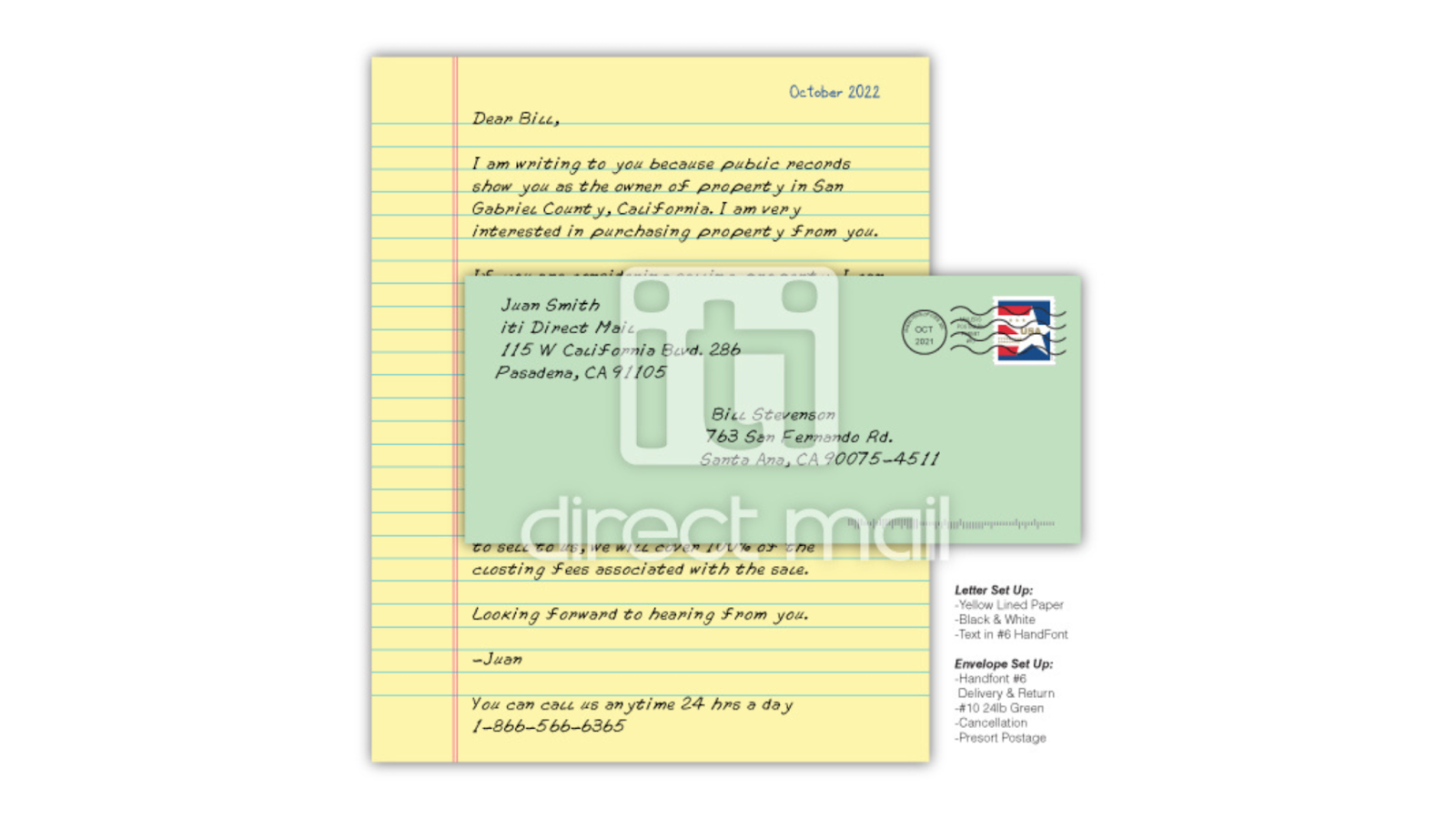
The second part is the letter inside. Unlike a standard marketing flyer or glossy brochure, the yellow letter’s content is designed to mimic the look and feel of personal correspondence. It’s often printed on lined notebook paper or stationery that looks like it came from someone’s desk at home. The text is written in a friendly, conversational tone, as though the sender sat down to write it just for the recipient. It’s addressed directly to them by name, signed with a first name (sometimes in blue ink for extra authenticity), and completely avoids the stiff, corporate jargon people expect from advertising mail.
This style isn’t accidental; it has roots in relationship-driven industries like real estate investing, local service businesses, grassroots fundraising, and community outreach. These are areas where trust and personal connection matter more than flashy branding. Instead of broadcasting to a broad audience, yellow letter campaigns aim to connect with individuals one at a time, building rapport from the very first interaction.
Marketers who use this technique often go the extra mile to make the presentation feel authentic. That means hand-addressed envelopes (or high-quality handwriting fonts that look indistinguishable from the real thing), peel-and-stick postage stamps instead of printed metered marks, and minimal to no corporate branding on the outside. Every element is chosen to reinforce the idea that this isn’t junk mail, it’s a genuine letter meant for one specific person.
The brilliance of the yellow letter envelope is in its simplicity. By stripping away the obvious signs of mass marketing and replacing them with familiar, human touches, you bypass the mental filters that make people ignore most of their mail. Instead, you create a piece they feel compelled to open, and that small change in presentation can lead to a big difference in results.
The Psychology Behind Higher Open Rates
At the heart of the yellow letter envelope’s success is one of the most basic yet powerful human traits: curiosity. Every day, people sort through stacks of mail, bills, catalogs, flyers, and the occasional personal card or letter. This sorting process happens in seconds, almost on autopilot, as the brain scans each piece and quickly decides whether it’s worth opening. Most promotional mail is easy to spot and even easier to ignore. But when something looks different, when it stands out in a way that feels personal, our natural instinct is to find out more.
Yellow letter envelopes are intentionally designed to trigger that exact response. The soft manila or pastel yellow color instantly catches the eye in a sea of predictable white envelopes and oversized glossy promotions. That subtle pop of color signals that this piece is not like the rest, and that visual difference is often enough to break through the mental filter people use to weed out “junk” mail.
Once the envelope has their attention, the details work together to deepen the intrigue. A handwriting-style address makes it look as though it was written by a real person, not churned out by a corporate mailroom. The absence of heavy branding on the outside keeps the mystery alive, while a live peel-and-stick postage stamp (rather than a printed meter) reinforces the sense that someone took the time to send this specifically to them. These small touches collectively make the envelope feel personal, intentional, and worth opening.
There’s also a subtle emotional layer that shouldn’t be overlooked. Colors have psychological associations, and yellow often conveys warmth, optimism, and friendliness. When someone sees a yellow-toned envelope, it feels less formal, less intimidating, and more approachable. This emotional cue works on a subconscious level, making the recipient more inclined to open the envelope and engage with what’s inside. Compared to the stark, business-like feel of a white commercial envelope, the yellow letter format creates a sense of human connection before the seal is even broken.
How Yellow Letter Envelopes Improve Direct Mail Campaign Results
Direct mail is a process, and like any process, it works best when every step builds toward the next. The very first step, and the most critical one, is getting your envelope opened. If that doesn’t happen, it doesn’t matter how persuasive your message is, how compelling your offer is, or how perfectly targeted your audience may be. A campaign’s success starts at that moment of decision, when the recipient chooses to open the envelope rather than toss it aside.
Yellow letter envelopes excel at winning that moment. By combining an attention-grabbing color with authentic, handwritten-style details, they create an immediate sense of personal connection before the recipient even knows what’s inside. This small but powerful shift in presentation can dramatically increase open rates, and higher open rates naturally lead to more people reading your message, considering your offer, and taking action.
Once the envelope is opened, the experience continues to feel personal and relevant. The letter inside isn’t laid out like a mass-produced advertisement; instead, it reads like a one-on-one conversation. The tone is friendly, the message is direct, and the content is often tailored to the recipient’s specific situation. This makes people more likely to read the letter all the way through rather than skimming and discarding it.
Just as importantly, yellow letter envelopes help reduce the automatic “junk mail” reflex many people have. Traditional marketing envelopes, with corporate logos, printed return addresses, and promotional taglines, are easy to spot as advertisements. In contrast, a yellow letter envelope feels like it could contain something personal, important, or even urgent. That change in perception is often enough to get your mail past the initial filter and into the recipient’s hands with genuine interest.
Certain industries, particularly those built on trust and relationship-building, see exceptional results with this approach. Real estate investors often use yellow letters to reach homeowners about potential buying or selling opportunities in a way that feels approachable rather than sales-driven. Local small businesses rely on them to introduce themselves to the community and make a memorable first impression. Nonprofit organizations use them to thank donors or encourage continued support in a warm, human way. Even political campaigns have found success using yellow letters to connect with voters personally, creating a sense of familiarity and shared values that traditional campaign mail often lacks.
In every case, the yellow letter envelope acts as a bridge between sender and recipient, transforming what could have been another piece of overlooked marketing into a conversation starter, and often, the first step toward a new customer, donor, or supporter.
Best Practices for Using Yellow Letter Envelopes
If you want your yellow letter campaign to reach its full potential, the smallest details can make the biggest difference. Yellow letter marketing thrives on authenticity, so your goal should be to create a piece of mail that feels like it came directly from one person to another, not from a marketing department.
The first step is to nail the look and feel of both the envelope and the letter inside. Instead of a generic, printed address, opt for handwritten or script-style fonts. These can be created by hand for small batches or replicated with high-quality printing that mimics the slight imperfections of real handwriting. Even if you’re scaling your campaign to hundreds or thousands of letters, this personal touch instantly makes your mail stand out.
Another key detail is the postage. Real peel-and-stick stamps send an important signal; they suggest that someone personally applied them, rather than running the mail through a machine. Metered postage, while practical for bulk mail, screams “mass mailing” and works against the authenticity you’re trying to achieve. Choosing a simple, recognizable stamp design also helps the envelope feel warm and familiar.
When it comes to the content inside, keep the tone casual, direct, and personal. Imagine you’re writing to one person, not to a database. Use the recipient’s name naturally throughout the letter, and reference any relevant details you have about their situation. This is where variable data printing becomes invaluable. It allows you to tailor each letter with specifics, whether it’s their property address, the date of a past conversation, or a local reference that proves you know their area.
One of the easiest mistakes to make with yellow letter envelopes is giving away your intent too soon. Avoid cluttering the outside with company logos, slogans, or overt marketing language. The more it looks like personal correspondence, the more likely it is to get opened. For the return address, consider using a personal name instead of a business name. This keeps the intrigue alive and avoids triggering the “this is an ad” reaction.
Ultimately, the guiding principle here is authenticity over flash. You’re not trying to wow someone with a glossy, high-production piece; you’re trying to connect in a way that feels genuine, human, and intentional.
Pairing Yellow Letter Envelopes with a Strong Campaign Strategy
While yellow letter envelopes can dramatically improve open rates, they aren’t magic on their own. The best results come when they’re used as part of a thoughtful, well-coordinated direct mail strategy that aligns timing, targeting, and follow-up.
It starts with audience selection. A yellow letter is only as effective as the relevance of its message, so it’s crucial to mail it to the right people. A highly targeted mailing list, homeowners in a specific neighborhood, recently sold property owners, active donors, or past customers, ensures that your letter lands in the hands of people who are more likely to respond. The more targeted you are, the more personal and intentional the letter will feel.
Timing is another critical factor. Mailing your letters when recipients are more likely to check their mail and have the bandwidth to engage with it can boost results significantly. Many businesses find midweek mail drops, Tuesday through Thursday, strike the right balance. Mondays tend to be hectic, with people catching up after the weekend, while Fridays can get lost in the transition to weekend plans. Strategically timing your send also matters if your campaign is tied to a seasonal offer, event, or deadline.
Finally, the most successful yellow letter campaigns don’t stop at the mailbox. Direct mail works best when it’s part of a multi-touch outreach plan. That means following up your yellow letter with another contact point, such as a phone call, a personal email, or even a second piece of mail, within days or weeks of the first. This layered approach reinforces your message, keeps your name fresh in their mind, and builds familiarity over time.
When you combine the personal charm of a yellow letter envelope with smart targeting, strategic timing, and consistent follow-up, you’re not just sending mail, you’re building a conversation. And that’s where the real value lies: turning initial curiosity into meaningful engagement that drives results.
Measuring Performance and ROI
One of the greatest advantages of direct mail, especially in an era dominated by digital marketing, is that it can be measured with precision if you plan it right from the start. Yellow letter campaigns are no exception. In fact, because their purpose is to stand out and generate a higher response rate, tracking their performance is essential to proving their value and refining your future mailings.
The first step is deciding what metrics matter most for your business or campaign. While open rates are important, they’re only the beginning. You also want to track the percentage of recipients who take the next step, whether that’s visiting a website, making a phone call, attending an event, or completing a purchase. By measuring not only the initial curiosity sparked by the envelope but also the resulting actions, you get a clear picture of your campaign’s true impact.
A smart way to do this is through A/B testing. This involves splitting your mailing list into at least two groups: one that receives the yellow letter envelopes and another that receives a standard, more traditional envelope. Keep all other elements, such as the letter content, mailing list, and timing, identical, so the only variable is the envelope style. This makes it easy to see whether the yellow envelope genuinely boosts engagement. Many marketers are surprised at how significant the difference can be, with some reporting open rates and responses that are double, or even triple, those of conventional formats.
To go even deeper, incorporate tracking tools into your campaign. For example:
- QR codes that link directly to a property listing, sign-up page, or campaign-specific landing page allow you to see exactly how many people scanned and interacted.
- Unique phone numbers dedicated solely to the campaign make it possible to track incoming calls and measure interest without confusion from other marketing efforts.
- Custom URLs or promo codes can connect the response directly back to the mailing, showing you not only how many people engaged but also how many converted into paying customers, donors, or clients.
By combining these tools with careful record-keeping, you’ll know exactly how well your yellow letter campaign performed compared to other mail formats. Even better, you’ll have a data-backed case for why you should invest in this approach again, and insights into how you can tweak your messaging, design, or targeting for even stronger results next time.
Why Work with a Professional Mailing Partner for Yellow Letter Campaigns?
While it’s absolutely possible to run a yellow letter campaign on your own, doing it well takes more than just buying yellow envelopes and writing a few lines in a handwriting font. If you want to scale your outreach without losing the personal touch, partnering with a professional mailing service can make all the difference.
A professional mailing partner understands that the power of a yellow letter lies in the details. They have the tools and expertise to replicate authentic handwriting styles so that every envelope and letter feels genuinely hand-prepared, not mass-produced. They also have systems in place for precise addressing, avoiding common mistakes like misaligned text or inconsistent font sizes that can undermine the credibility of your mailing.
Just as important, a good partner knows the ins and outs of USPS regulations and postage optimization. Mailing large volumes of letters means you’ll need to think about bulk rates, automation compatibility, and delivery timing, and if you get these wrong, you could face delays or extra costs. Professionals handle these complexities for you, ensuring your letters land in mailboxes exactly when you want them to.
Another benefit is scalability without sacrificing quality. If you’re sending a few hundred letters, doing it yourself might seem manageable. But if your campaign grows to thousands, or even tens of thousands, trying to maintain a consistent, handcrafted look can quickly become overwhelming. Professional partners have the capacity to produce large volumes while keeping every piece aligned with the personal, human feel that makes yellow letter campaigns work.
Most importantly, a mailing partner doesn’t just “send mail”; they help you maximize your results. From advising on targeting and timing to ensuring every detail is just right, they act as an extension of your marketing team. The result? You save time, avoid logistical headaches, and launch a campaign that’s polished, professional, and far more likely to achieve the impact you’re aiming for.
Conclusion
Yellow letter envelopes work because they tap into something simple but powerful: curiosity and human connection. They stand out in the mailbox, feel personal, and encourage recipients to open and read the message inside. For businesses, nonprofits, political campaigns, and especially real estate professionals, they can make the difference between a mailer that gets ignored and one that drives real action.
The key to success is pairing the right envelope style with quality production, authentic personalization, and smart mailing strategy.
At LetterPrinting, we specialize in creating authentic, high-impact yellow letter campaigns that get opened, read, and acted on. From handwritten-style envelopes and personalized letters to targeted mailing lists and USPS delivery, we handle it all, saving you time and increasing your results. Whether you’re looking to connect with local homeowners, donors, or voters, we can help you create a campaign that feels personal and delivers measurable ROI.
Ready to see what yellow letter envelopes can do for your next direct mail campaign? Visit LetterPrinting today and let’s start building a strategy that works.


